
How to Choose an HR System: 5 Factors to Consider

5 Interview Questions That Reveal Culture Fit
What You Should Know About People Management: Definition & Importance

What Business Owners Should Know About People Management

Table of Content
People management is one of the most underestimated drivers of business success. While many business owners invest significant time and resources into sales, marketing, product development, and operations, they often overlook the systems, structures, and leadership skills required to effectively manage the people who make those functions possible.
A business can only grow to the extent that its people grow. Your employees are not just resources, they are the engine that drives innovation, customer satisfaction, operational excellence, and long-term profitability. When people are well-led, engaged, and empowered, they perform at their best. When they are not, even the strongest business strategies can fail.
Whether you’re building a startup or scaling a small or medium-sized enterprise (SME), effective people management is a competitive advantage. It enables you to attract and retain top talent, reduce employee turnover, improve productivity, strengthen accountability, and foster a resilient workplace culture that can adapt to change. Ultimately, organizations that prioritize their people are better positioned to achieve sustainable growth and long-term success.
What is People Management?
People management refers to the structured approach business owners and leaders use to hire, lead, develop, engage, and retain employees in a way that supports both individual performance and overall business goals.
It goes far beyond basic supervision or assigning tasks. It is about creating clarity, alignment, and consistency in how people operate within the organization.
Effective people management involves setting clear expectations so employees understand what is required of them, building strong and trust-based relationships that encourage open communication, and actively driving performance through continuous feedback, support, and accountability.
Importance of People Management
Business owners who invest in managing their people effectively often see measurable improvements across productivity, retention, culture, and overall growth.
1. Employee Productivity
Employee productivity is directly influenced by how well people are managed within an organization. When employees clearly understand their roles, responsibilities, and performance expectations, they are more confident and efficient in executing their tasks.
A structured people management approach ensures that goals and KPIs are clearly defined, feedback is consistent, and employees have access to the right tools and support.
Without this clarity, employees may waste time navigating confusion or correcting avoidable mistakes. In contrast, well-managed teams operate with focus, accountability, and direction, leading to higher output, better quality work, and improved overall efficiency.
2. Reduced Turnover
One of the biggest misconceptions among business owners is that employees leave primarily because of salary. In reality, poor management is one of the leading reasons employees disengage and eventually leave.
Employees are more likely to stay where they feel valued, heard, and supported, and where there are clear opportunities for growth and development.
High turnover comes at a cost, recruitment expenses, onboarding time, and the loss of valuable institutional knowledge.
Effective people management builds trust, strengthens relationships, and creates a stable work environment, all of which contribute to higher retention and a more committed workforce.
3. Company Culture
Company culture is not defined by what is written in a handbook or displayed on office walls, it is shaped by everyday employee experiences.
People management plays a critical role in defining that experience through leadership behavior, communication, and how decisions are made. When managers consistently demonstrate transparency, fairness, and respect, it fosters trust and psychological safety within the team.
4. Business Growth
Engaged and well-managed employees are more likely to take ownership of their work, contribute innovative ideas, and adapt to changing business needs.
They execute tasks more effectively and consistently, which directly impacts overall business performance. In contrast, poorly managed teams often struggle with low morale, lack of accountability, and resistance to change, all of which can hinder growth.
As a business scales, having strong people management systems in place becomes essential for maintaining structure, efficiency, and long-term sustainability.
Key Areas of People Management
1. Hiring The Right People
Hiring mistakes are expensive and can have long-term consequences on team performance and business growth. Instead of rushing the recruitment process, it is important to take a more strategic approach by clearly defining the role in terms of required skills, expected outcomes, and performance expectations.
Business owners should also aim to hire not just for competence, but for culture fit, ensuring that new employees align with the company’s values and work environment.
Using structured interviews can help reduce bias and improve the quality of hiring decisions, while focusing on long-term value rather than short-term convenience ensures that each hire contributes meaningfully to the organization’s success over time.
2. Setting Clear Expectations
Many workplace performance issues can be traced back to unclear or poorly communicated expectations. When employees are not fully aware of what is required of them, it often leads to confusion, inconsistency, and underperformance.
To prevent this, business owners should clearly define roles and responsibilities from the outset, ensuring that every employee understands their scope of work.
It is also important to set measurable goals and KPIs that align with overall business objectives, while consistently communicating what success looks like in practical terms.
Employees should never have to guess what good performance means. Clarity and alignment from day one create a strong foundation for accountability, productivity, and long-term success.
3. Communication
Poor communication in the workplace often leads to confusion, low morale, and costly mistakes that can slow down business progress.
Business owners understand that communication is not just about giving instructions, but about creating clarity, alignment, and trust within the team.
This involves holding regular check-ins to stay connected with employees, providing clear and constructive feedback that helps improve performance, and actively listening to employees’ concerns, ideas, and challenges rather than just speaking.
4. Performance Management
Performance management should not be seen as a disciplinary tool but as a continuous process focused on improvement and growth.
When business owners consistently track employee progress, they gain better visibility into performance trends and can make informed decisions early.
Addressing issues as they arise prevents them from escalating into larger problems that affect team output and morale. At the same time, recognizing and rewarding strong performance reinforces positive behavior and motivates others to improve.
Providing the right support, whether through training, tools, or guidance, ensures that employees are equipped to succeed.
5. Employee Engagement
This is a critical factor that directly impacts productivity, retention, and overall business success.
To build an engaged workforce, business owners must be intentional about recognizing achievements, as appreciation boosts morale and reinforces positive contributions.
Providing opportunities for growth and development helps employees feel invested in their roles and future within the company.
6. Handling Conflict
Conflict is inevitable in any workplace, but how it is managed determines its impact on the business. Ignoring conflict does not make it disappear; instead, it often allows issues to grow and negatively affect team dynamics and productivity.
Effective business owners address conflicts early, before they escalate, and approach difficult conversations with objectivity and calmness. Rather than focusing on blame, the emphasis should be on finding practical solutions that move the team forward. In some cases, documenting key discussions can provide clarity and accountability.
When handled properly, conflict can lead to better understanding, stronger relationships, and improved team performance, making it an opportunity for growth rather than a setback.
7. Automated Systems
As a business grows, relying on manual processes to manage people quickly becomes inefficient, error-prone, and difficult to scale.
Smart business owners recognize the need for structured systems and tools that simplify and streamline people management.
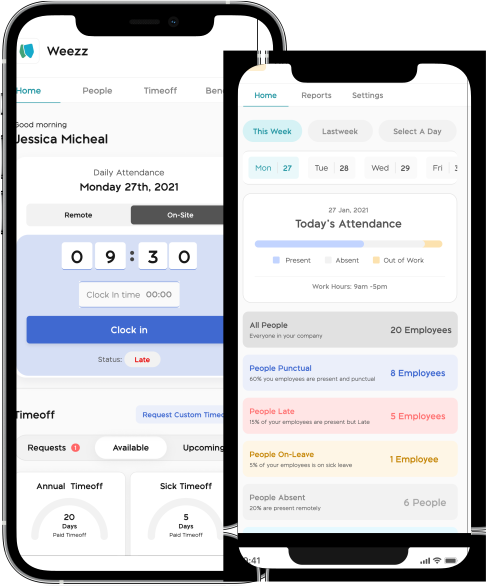
By using the right solutions, businesses can effectively track employee attendance and performance, manage payroll and ensure compliance with regulations, securely store and access employee data, and automate repetitive HR tasks that would otherwise consume valuable time.
These systems not only improve accuracy and reduce errors but also free up time for business owners and managers to focus on strategic decisions and team development. Implementing the right people management tools creates efficiency, consistency, and scalability within the organization.
Looking for a smarter way to manage HR processes?