

How to Conduct a Workplace Investigation in 2026

How to Retain Gen Z Employees in the Workplace

Sexual harassment training is no longer something businesses can treat as a simple HR formality. In today’s workplace, employees expect organizations to create safe, respectful, and professional work environments where inappropriate behavior is taken seriously.
Yet many companies still approach workplace sexual harassment training as a once-a-year compliance activity instead of an important part of employee experience and workplace culture.
If training sessions feel rushed, overly scripted, or disconnected from real workplace situations, employees are less likely to engage with the process or trust the company’s reporting structure.
So the real question is not just “Have you conducted sexual harassment training?”
The better question is: “Did the training actually help employees feel safer, informed, and supported?”
Ready to manage workplace training better?
Schedule a free 30-minute walkthrough.
This is a workplace training program designed to educate employees and managers on:
Effective employee harassment training helps businesses reduce workplace misconduct, improve employee awareness, strengthen workplace culture, and support compliance with labor and HR policies.
Most importantly, it helps organizations create safer workplaces where employees feel respected and protected.
One major reason workplace harassment prevention training fails is because many organizations make it feel like a legal presentation instead of a meaningful workplace conversation.
Employees often sit through long presentations filled with policies and definitions but leave without understanding how harassment actually appears in real work environments.
For example, employees may still struggle to identify:
Without relatable examples and practical discussions, training becomes forgettable.
And when training feels performative, employees may hesitate to report workplace concerns because they assume the organization is more focused on compliance than employee wellbeing.
Before conducting sexual harassment training, businesses need clear workplace harassment policies employees can easily understand.
Your policy should clearly explain:
Employees should never feel confused about where the organization stands on workplace misconduct.
One of the best ways to conduct effective workplace sexual harassment training is through practical examples employees can relate to.
Ask questions employees may realistically encounter in the workplace as it can help employees understand that workplace harassment are not handled with levity.
Managers and supervisors should receive more advanced sexual harassment prevention training because employees often report workplace concerns to leadership before approaching HR formally.
Manager training should focus on:
The way leadership handles workplace complaints directly affects employee trust.
Annual training sessions alone are not enough to build a respectful workplace culture.
Organizations should reinforce workplace conduct regularly through:
Consistent communication helps employees understand that workplace respect is an ongoing priority, not just a yearly presentation.
Employees are more likely to report workplace harassment when they trust the reporting process.
Many employees remain silent because they fear:
This is why HR teams must create reporting systems that feel safe, professional, confidential, and accessible.
Employees should know exactly who to report to, what steps will be taken after a report is made, and how the organization protects employees throughout the process.
Just as importantly, companies need to ensure reports are handled consistently and professionally. One poorly handled complaint can damage employee trust across the entire organization.
Our robust mobile app synchronizes all your operations so you can keep running your business on the GO!


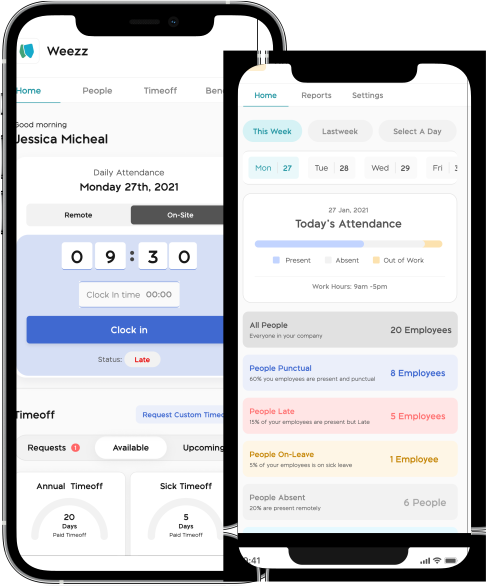
Our robust mobile app synchronizes all your operations so you can keep running your business on the GO!
Let’s get your business moving with no hassle
Let’s get your business moving with no hassle